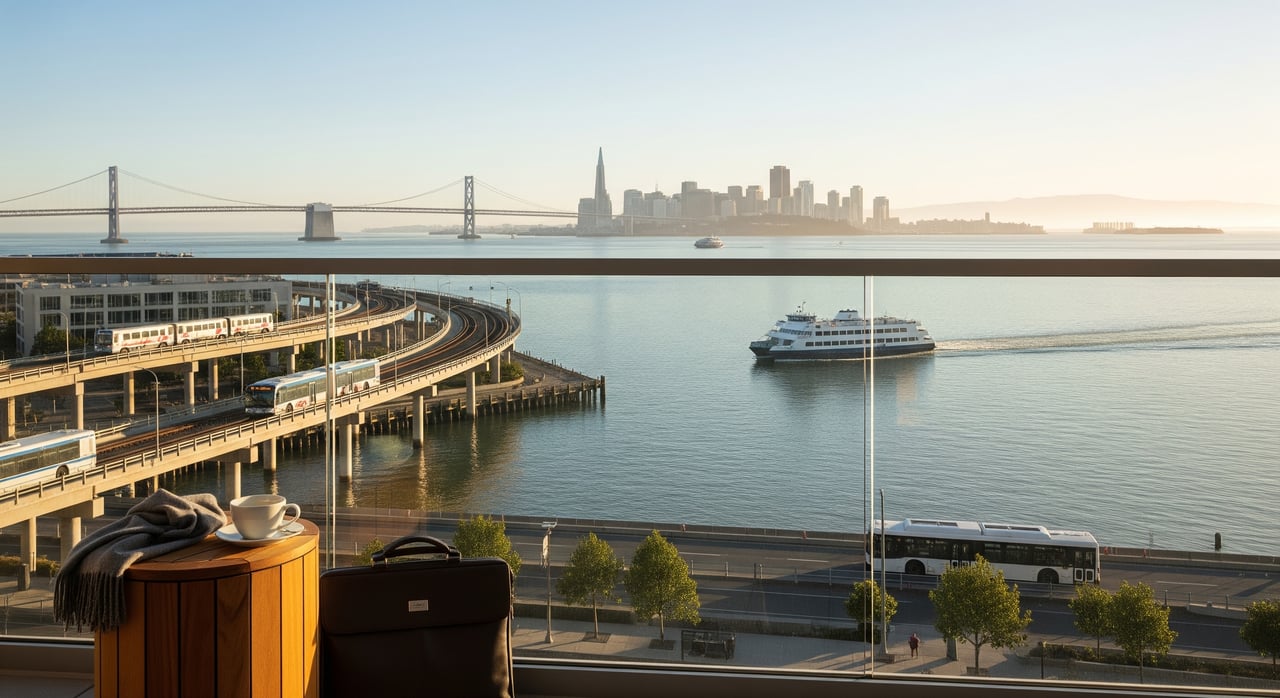
Choosing the right Oakland neighborhood often comes down to one daily question: how will you get to work in San Francisco or along the Peninsula? If you are weighing school drop-offs, flexible schedules, or client meetings, your commute needs to be reliable and predictable. In this guide, you will compare BART, transbay buses, and the San Francisco Bay Ferry so you can match your routine to the best mode. Let’s dive in.
Oakland commute modes at a glance
- BART: Fast, frequent rail between Oakland and San Francisco with short in-vehicle times on core segments. Distance-based fares and Clipper payment.
- Transbay bus: AC Transit routes cross the Bay Bridge to the Salesforce Transit Center, often closer to more residential streets. Travel time varies with bridge traffic.
- Ferry: Comfortable seats, predictable on-water timing, and a pleasant ride from Jack London Square and Alameda terminals. Less frequent than BART with limited terminal locations.
BART: fast and frequent
Coverage and timing
BART serves multiple Oakland stations, including West Oakland, 12th St/Oakland City Center, Fruitvale, Lake Merritt, and MacArthur. Trains run directly to central San Francisco stations with short in-vehicle times from central Oakland. For current routes and door-to-door options, use the BART trip planner.
Fares and passes
BART uses a distance-based fare system and accepts Clipper. You can estimate your trip costs with the BART fare calculator and use employer commuter benefits where available. Clipper simplifies paying across all three modes.
Station access and parking
Many stations offer paid daily parking or permits, and some lots fill early on weekdays. If you plan to drive and park, arrive early or consider kiss-and-ride drop-offs. Check station-specific policies through BART’s planner and station pages before you commit to a routine.
Bikes, strollers, and accessibility
BART stations include elevators and accessible access points. Bikes are allowed with some time and space considerations, and folding bikes are typically the easiest option at peak times. Factor a few extra minutes if you are traveling with a stroller or young children.
Reliability and comfort
BART is designed for peak-hour frequency on core tracks, which helps reduce wait time. Trains can be crowded during rush hours. Plan a buffer on days with scheduled maintenance or advisories.
Transbay bus: neighborhood coverage
Routes and timing
AC Transit connects Oakland neighborhoods to San Francisco’s Salesforce Transit Center. On clear traffic days, buses may cross the bridge relatively quickly, while congestion can add time. Review your specific route and departure windows on AC Transit’s transbay routes page and plan door-to-door with the Plan Your Trip tool.
Fares and passes
Transbay fares differ from local fares, and AC Transit accepts Clipper along with period pass options. Confirm your current costs and pass choices on the AC Transit fares page. If your employer offers pre-tax benefits, you can often use them through Clipper.
Access and comfort
Bus stops are embedded within more neighborhoods than rail, which can shorten your first-mile walk. Most buses have bike racks and accessible boarding. Peak hours can be crowded, so target express or limited-stop trips when available.
Reliability
Travel times depend on Bay Bridge traffic and on-ramps, though transit operations can help at certain times. Use real-time updates and allow a flexible buffer if your schedule is tight.
Ferry: comfortable and predictable
Terminals and timing
San Francisco Bay Ferry connects Jack London Square in Oakland and terminals in Alameda to San Francisco. The on-water ride is generally longer than BART but not affected by bridge traffic, which many commuters find predictable. Check routes and departure windows on the SF Bay Ferry schedules.
Fares and passes
Ferries accept Clipper and offer single-ride and discounted multi-ride options. Review current prices on the SF Bay Ferry fares page. If you commute several days each week, multi-ride products can help manage costs.
Parking and access
Jack London Square has nearby paid parking and transit connections, while Alameda terminals include lots with varying capacity. Walking, biking, or short ride-hail trips are common last-mile solutions. If you plan to park daily, test the routine during your typical commute window.
Reliability and comfort
Ferry schedules are stable and vessels are spacious, with seating and restrooms that suit longer trips or laptop work. Severe weather can occasionally affect service, so check advisories when storms are forecast. Many executives choose ferries for comfort and the ability to work en route.
Plan door-to-door, not just minutes
A great commute is about the entire journey, not only the time on a train or ferry.
- Use the BART trip planner, AC Transit Plan Your Trip, and SF Bay Ferry schedules to test peak and shoulder departure times.
- Add time for parking, station access, and last-mile connections to your office or school.
- If you plan to park, try your routine on a weekday morning to see real availability.
- Build a small buffer for child drop-offs, elevators, or folding strollers.
Neighborhood fit across Oakland and Alameda
- Downtown Oakland and Uptown: Walkable access to multiple BART stations, quick connections to San Francisco, and proximity to Jack London Square ferry.
- Jack London Square and waterfront corridors: Short walks to the Oakland ferry terminal, plus bus and BART connections.
- Alameda near Main Street or Harbor Bay: Direct ferry access with neighborhood parking options and local street connections.
- North and West Oakland, and areas near key bus corridors: Transbay buses often provide closer neighborhood stops where BART is not as near.
If you are evaluating the wider Oakland-Hayward-Berkeley corridor, match your home search to the hub that best supports your work location, school routines, and travel frequency.
Cost, passes, and Clipper basics
Clipper is the simplest way to pay across BART, AC Transit, and the ferry. You can manage autoload, passes, and employer pre-tax benefits through Clipper Card. If you travel most weekdays, look at monthly or multi-ride products for savings and pair them with parking budgets where needed.
Reliability and schedule stability
- BART: Frequent on core tracks, with occasional maintenance or delays. Crowding is common at peak hours.
- Transbay bus: Most sensitive to bridge congestion, with schedule benefits on express routes when traffic is light.
- Ferry: Predictable schedule, less affected by traffic, with occasional weather impacts.
Quick decision guide
- You want the shortest in-vehicle time downtown to downtown: Choose BART if a station is nearby.
- You prefer a seat and a predictable schedule with workspace: Choose the ferry if you are near Jack London Square or Alameda terminals.
- Your home is closer to a bus corridor than a BART station: Choose transbay bus service for the most convenient neighborhood access.
- You need flexible options for family routines: Combine park-and-ride with BART or ferry, or mix modes by day.
Relocation checklist
- Map your exact home-to-office pair and test peak trips on agency planners.
- Trial your commute for 1 to 2 weeks from a prospective neighborhood.
- Visit morning parking at your target station or terminal to confirm availability.
- Align school or child-care drop-off with your chosen station, stop, or terminal.
- Set up Clipper and confirm employer commuter benefits before your first week.
- Ask your employer about shuttles from BART or the ferry, and consider shifting start times to avoid peak crowds.
Choosing a home is easier when your commute fits your life. If you want help matching neighborhoods to your work routine and daily logistics, the Anthony Riggins Team can guide you to properties that align with the transit access you value.
FAQs
What is the fastest way from Oakland to downtown San Francisco?
- In-vehicle time is typically shortest on BART between central Oakland and central San Francisco, while door-to-door timing depends on your station access and last mile.
How do ferry rides compare to BART for reliability?
- Ferries follow set schedules and are not affected by bridge traffic, while severe weather can occasionally delay or cancel trips.
Are transbay buses a good option if I live far from BART?
- Yes, AC Transit transbay routes often run closer to residential streets, which can reduce your first-mile time compared with reaching a rail station.
What is the best way to estimate my commute cost?
- Use the BART fare calculator, AC Transit fares, and SF Bay Ferry fares, then pay with Clipper Card for simplicity.
Where do most transbay buses arrive in San Francisco?
- AC Transit transbay routes arrive at the Salesforce Transit Center, which is operated by the Transbay Joint Powers Authority, with details available from the TJPA.