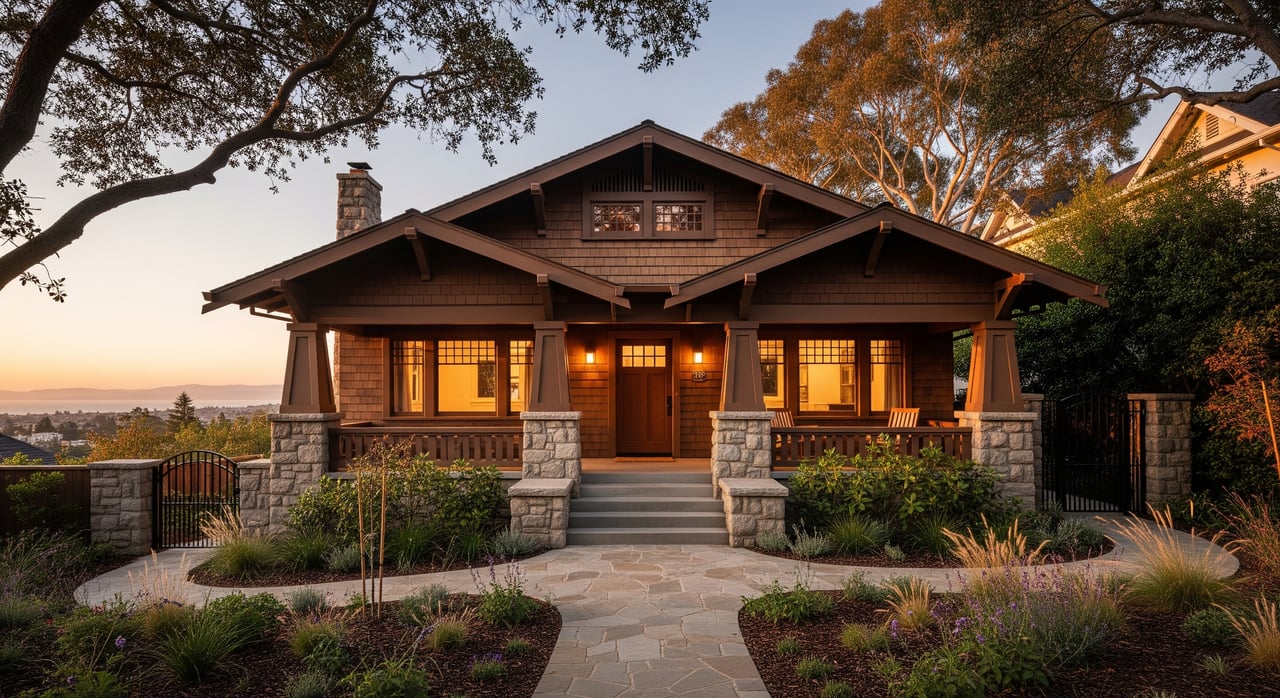
Love the warm woodwork, deep porches, and shingled silhouettes across Berkeley? If you are drawn to Craftsman bungalows or the region’s Brown Shingle homes, you are not alone. These styles shape Elmwood, North and South Berkeley, and the hillside streets, and they remain top choices for character and comfort. In this guide, you will learn how to recognize each style, what floor plans to expect, which issues to watch for, and how originality and upgrades influence value. Let’s dive in.
Berkeley Craftsman: key features
Craftsman bungalows in Berkeley were largely built circa 1905–1930. You will often see one to one-and-a-half stories with low to moderate gabled roofs and wide overhanging eaves. Exposed rafter tails and decorative beams are common visual cues.
Porches are a hallmark. Look for full or partial-width front porches with square or tapered piers set on heavy brick or stone bases. Porch supports can tie into roof brackets for a cohesive, handcrafted look.
Exterior cladding typically includes wood clapboard or shingles in natural or earth-tone finishes. Windows are usually double-hung with a multi-pane upper sash over a single-pane lower sash. Inside, you will find an open living-to-dining flow, a prominent fireplace, and built-ins such as bookcases, window seats, plate rails, and boxed beams.
Brown Shingle: key features
Brown Shingle houses in the Bay Area date from roughly 1900–1930 and often read as larger, more individual designs. The exterior usually features a continuous skin of wood shingles in brown or earth tones, sometimes wrapping both walls and complex rooflines.
Expect asymmetry. Roofs often show multiple gables or even gambrels with deep eaves. Porches may be recessed under the main roof or project with shingled balustrades. Window groupings can be double-hung or casement and are arranged to fit the composition rather than strict symmetry.
Interiors tend to be more formal than bungalows, with separate rooms for living, dining, and sometimes a library or study. Many have three to four bedrooms, larger fireplaces, and in some cases finished attics or former servant spaces.
Typical floor plans
Craftsman bungalows generally offer modest footprints with 2–3 bedrooms and 1 bath, plus a compact rear kitchen. Circulation is efficient, often with a short central hall or rooms opening directly from the living room. Attic or basement areas are often used for storage.
Brown Shingle houses are more complex. You may see a formal stair hall, separate living and dining rooms, and features like sun or sleeping porches in older plans. Many include three or more bedrooms and a stronger sense of separation between public and private spaces.
Construction and common issues
These houses were built with light wood framing, raised pier or shallow continuous foundations, and original single-pane wood windows. Interiors are commonly lath-and-plaster. Chimneys are often unreinforced masonry.
Typical age-related concerns include wood rot at sills, porch posts, eaves, and window frames, especially where flashing or gutters have failed. Shingle cladding can show checking, cupping, or splitting, particularly when historic redwood was replaced with lower-quality materials.
Termites and wood-destroying organisms are frequent in the subfloor, rim joists, and porch supports. Outdated systems can include knob-and-tube wiring, older electrical panels, galvanized or lead-era plumbing, older furnaces, minimal insulation, and drafty windows. Seismically, unanchored sill plates, unbraced cripple walls, and unreinforced masonry chimneys are common risk factors.
Smart retrofit priorities
- Seismic anchoring and cripple wall bracing are high priorities in this region. Costs vary by size and complexity, from smaller jobs to significant investments for larger homes.
- Foundation repairs and replacement of damaged mudsills help address settlement and moisture issues.
- Roof replacement and new flashing protect the envelope. Matching cedar or redwood shingles preserves character, though at a higher cost than composite options.
- Electrical upgrades, including panel replacement and rewiring, improve safety. Plumbing replacement from galvanized to copper or PEX is often needed.
- Window restoration can retain original character and often costs less per unit than custom new wood windows. Full replacements may boost energy performance but can reduce authenticity if not done sensitively.
- Insulation and air sealing should be planned to avoid trapping moisture in older wall assemblies.
How style affects value
Many East Bay buyers prize intact period character. Built-in cabinetry, original trim, mantels, and well-preserved windows create a strong first impression and can enhance market appeal. Larger, well-detailed Brown Shingle homes attract buyers who want scale and distinctive architecture, while bungalows appeal to those seeking cozy, efficient layouts with historic charm.
Condition matters. Visible deferred maintenance, like rot or sagging porches, can lower buyer confidence more than age alone. Homes with documented, sympathetic restorations using period-appropriate materials, permits, and clear records typically perform better than homes that stripped away original features.
Balance is key. Retain and repair primary historic features in public rooms while modernizing kitchens, baths, and mechanical systems behind the scenes. This approach often appeals to architecture-minded buyers and those who value comfort and safety.
Buyer showing checklist
- Exterior: roof condition, flashing, gutters, porch piers, shingle or clapboard condition, and paint or trim quality.
- Masonry: chimney plumbness, cracking, caps, and general stability.
- Interior: built-ins, floors, mantels, trim, and lath-and-plaster integrity; look for cracks and water stains.
- Systems: presence of knob-and-tube wiring, panel age, plumbing leaks, and furnace age; note insulation where visible.
- Foundation and seismic: crawlspace access, mudsill condition, cripple wall bracing, and anchor bolts.
- Pests and moisture: termite evidence, damp crawlspaces, and any earth-to-wood contact.
Seller prep priorities
- Fix moisture issues and rot, repair porches, and address any active leaks.
- Complete electrical safety upgrades and correct obvious plumbing issues.
- Stage to highlight original woodwork, built-ins, fireplaces, and porches using warm, natural light.
- Restore original windows where feasible; if replacing, select profiles that respect the home’s character and document the reasoning.
- If you complete seismic work, present clear, permitted documentation to boost buyer confidence.
Permits and preservation
In Berkeley, some properties are individually landmarked or part of designated historic districts. Exterior changes in these cases can require review and permits. The city maintains a Historic Resources inventory and administers local processes that guide alterations.
Owners of qualified historic properties may be eligible for tax incentives through California’s Mills Act, which is administered locally. Always verify eligibility and requirements with city planning staff. In general, structural, electrical, plumbing, roofing, and seismic work require permits, and unpermitted work can complicate a sale.
Trusted local expertise
When evaluating or planning work, consult a preservation-minded architect, a contractor experienced with wood windows and shingle exteriors, and a structural engineer who understands seismic retrofits for older wood-frame houses. Local preservation organizations and the City of Berkeley’s planning staff can provide guidance on designation and review processes.
Ready to position your Craftsman or Brown Shingle for a standout result, or to buy with confidence? The Anthony Riggins Team provides full-service listing preparation, renovation coordination, staging, and polished marketing that elevates East Bay homes.
FAQs
What distinguishes Craftsman from Brown Shingle in Berkeley?
- Craftsman bungalows are typically smaller with gabled roofs and prominent porches, while Brown Shingle homes are larger, asymmetrical, and wrapped in continuous wood shingles.
Which upgrades add value to these older homes?
- Seismic bracing, foundation repairs, roof and flashing renewal, and documented electrical and plumbing upgrades increase buyer confidence while preserved original features enhance appeal.
How do I improve energy efficiency without losing character?
- Favor window restoration, targeted air sealing, and carefully planned insulation that avoids trapping moisture, paired with system upgrades behind the scenes.
What seismic retrofits are common in Berkeley’s early 1900s homes?
- Sill plate anchoring, cripple wall bracing, and addressing unreinforced masonry chimneys are typical priorities for these wood-frame houses.
Do historic designations change what I can remodel?
- Yes. Landmark or district properties can require exterior alteration review and permits; always consult the city’s planning department before starting work.
Are original wood windows a deal-breaker for buyers?
- Not usually. Restored original windows preserve character and can perform well; full replacements can help energy performance but may reduce historic integrity if not done carefully.